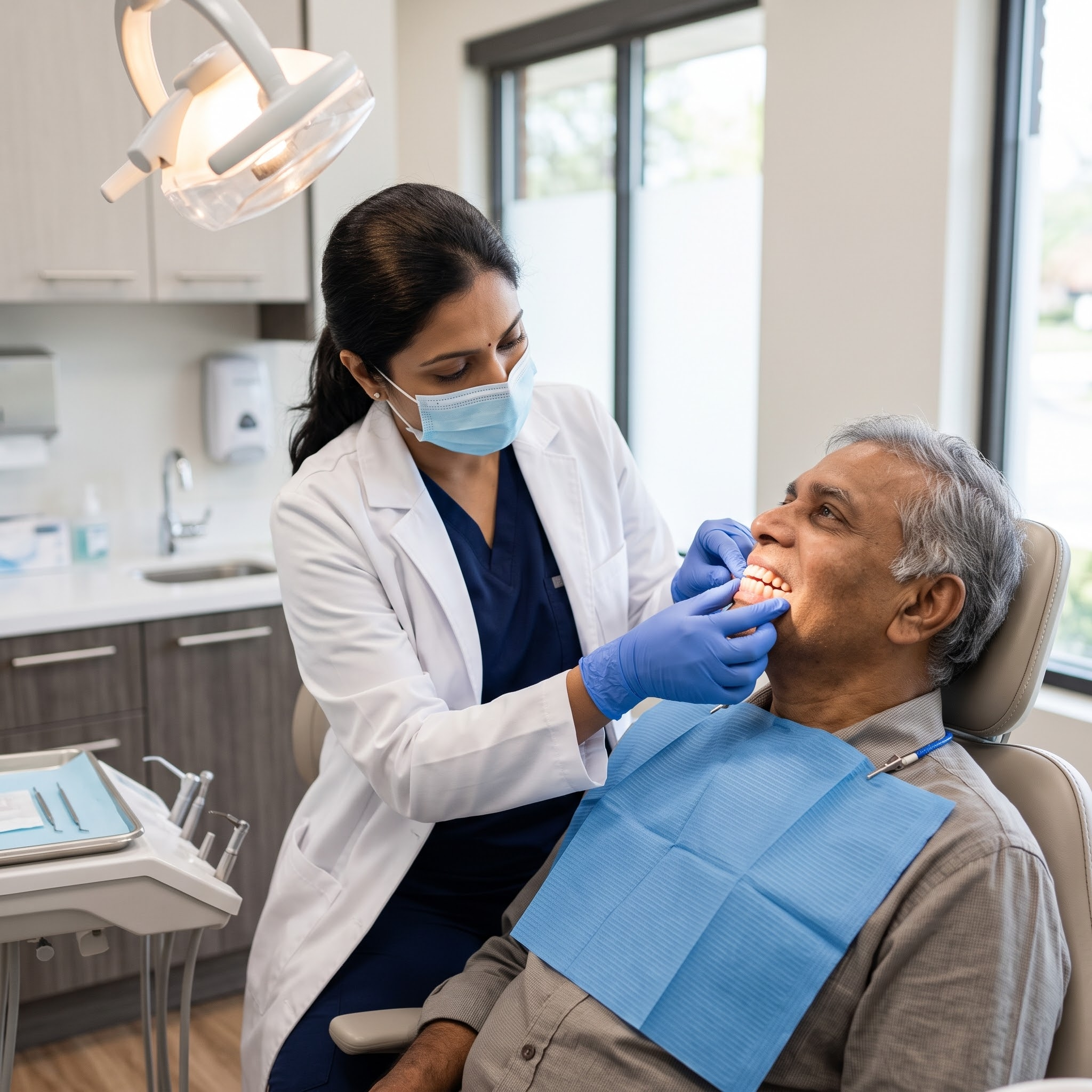
Missing teeth can affect much more than your smile. They can make chewing difficult, affect speech, change the way your remaining teeth meet, and sometimes affect your confidence in everyday situations.
Fortunately, modern dentistry offers several ways to replace missing teeth. Two of the most common options are dentures and dental implants. Both can restore function and appearance, but they work in very different ways.
If you are considering tooth replacement, understanding the differences between dentures and implants can help you have a more informed discussion with your dentist.
A consultation with a qualified Prosthodontics Service Nagercoil provider can help determine which option is appropriate based on the number of missing teeth, your oral health, jawbone condition, lifestyle, and treatment expectations.
Why Should Missing Teeth Be Replaced?
A missing tooth can create problems beyond the visible gap.
Depending on the number and location of missing teeth, tooth loss may affect:
- Chewing and eating
- Speech
- Smile appearance
- Confidence
- The position of neighbouring teeth
- Bite balance
- Jawbone support around the missing tooth
When several teeth are missing, these effects can become more noticeable.
Replacing missing teeth can help restore oral function and provide a more complete smile.
What Are Dentures?
Dentures are removable dental appliances designed to replace missing teeth.
Depending on the patient’s needs, dentures can replace:
- Several missing teeth
- Most of the teeth
- All teeth in an arch
Partial dentures replace some missing teeth while retaining the patient’s natural teeth. Complete dentures are designed for patients who have lost all or most of the teeth in an arch.
Modern dentures can be designed to look natural and fit comfortably when properly planned and adjusted.
What Are Dental Implants?
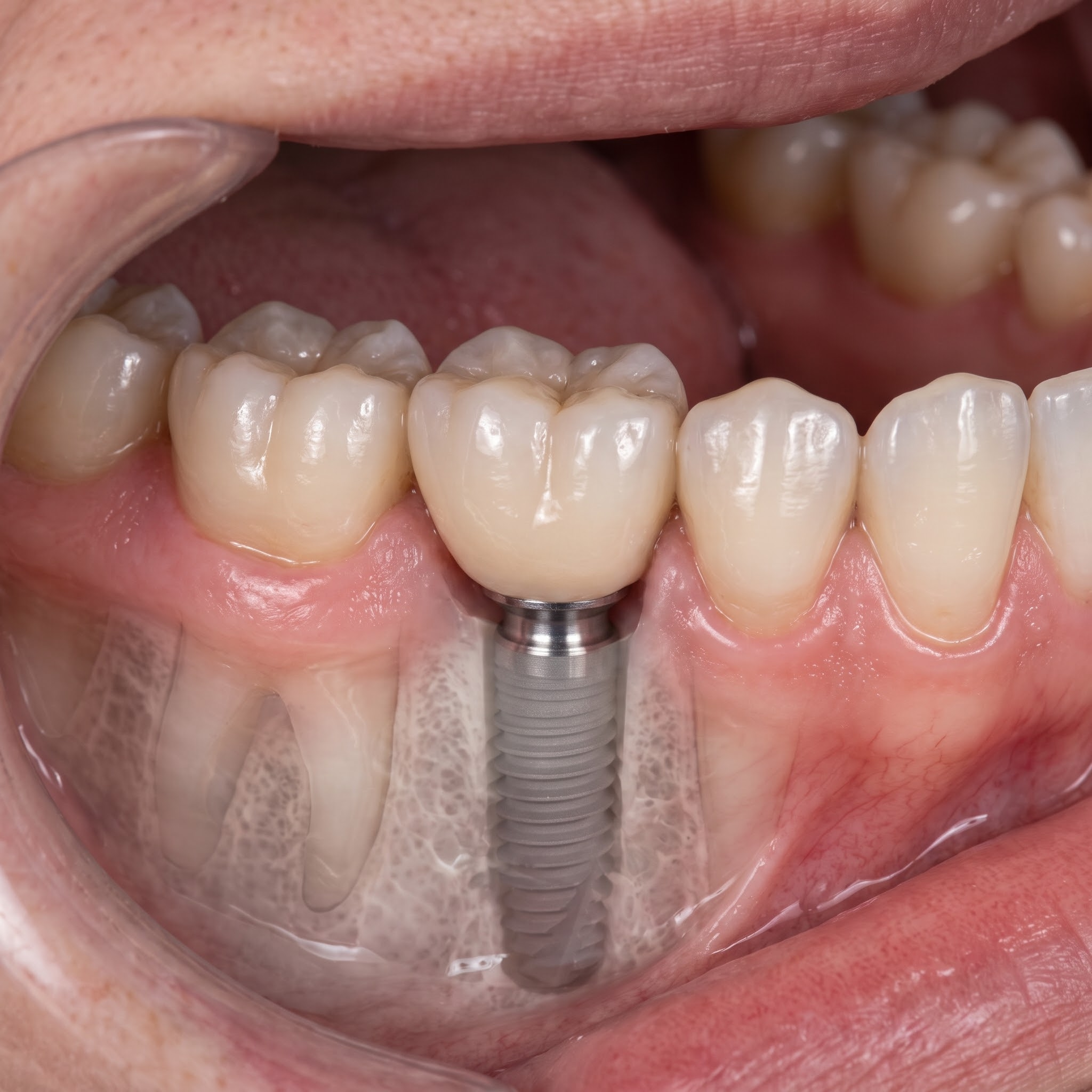
Dental implants are tooth-replacement solutions that use small implant posts placed into the jawbone to support a dental restoration.
A typical implant-supported tooth replacement may involve:
- A dental implant placed in the jawbone
- A connector or abutment
- A crown or other dental restoration
Implants are designed to provide a stable foundation for replacement teeth.
Depending on the patient’s situation, implants can support individual crowns, bridges, or implant-supported dentures.
Dentures vs Dental Implants: What’s the Difference?
Both options can replace missing teeth, but they differ in design, stability, maintenance, treatment process, and cost.
| Feature | Dentures | Dental Implants |
| Removable | Usually yes | Generally fixed once restored |
| Jawbone integration | No | Implant integrates with bone |
| Stability | Can vary | Generally highly stable |
| Surgery | Usually not required | Surgical placement is required |
| Cleaning | Removed for cleaning | Cleaned in the mouth like natural teeth, with professional guidance |
| Treatment time | Often shorter | Usually requires multiple treatment stages |
| Bone requirements | Less dependent on available bone | Adequate bone may be required |
| Replacement type | Removable appliance | Fixed or implant-supported restoration |
| Suitable for | Many types of tooth loss | Selected patients with suitable oral and general health |
The right choice depends on your individual situation rather than simply choosing the most advanced-sounding option.
Advantages of Dentures
Dentures remain a practical tooth-replacement option for many patients.
1. Replace Multiple Missing Teeth
A partial or complete denture can replace several missing teeth at the same time.
2. No Implant Surgery
Traditional dentures do not require surgical placement into the jawbone.
3. Can Be More Accessible
Depending on the design and materials used, dentures may have a lower initial treatment cost than implant-supported solutions.
4. Relatively Quick Treatment
The treatment process can often be completed more quickly than a multi-stage implant procedure, although the exact timeline varies.
5. Removable Design
Some patients appreciate being able to remove their dentures for cleaning or other reasons.
Limitations of Dentures
Dentures can provide effective tooth replacement, but they also have certain limitations.
Some patients may experience:
- Movement while eating or speaking
- A period of adjustment
- Gum soreness if the fit is not ideal
- Difficulty with certain hard or sticky foods
- The need for periodic adjustment or replacement
- Changes in fit over time as the jawbone and gums naturally change
Proper fitting and regular dental reviews are important for long-term comfort.
Advantages of Dental Implants
Dental implants offer a different approach to replacing missing teeth.
1. Strong Stability
Implants are anchored into the jawbone, providing a stable foundation for a crown, bridge, or implant-supported denture.
2. Natural-Looking Results
Implant-supported restorations can be designed to closely resemble natural teeth in appearance and function.
3. No Need to Remove the Restoration for Routine Use
Unlike traditional removable dentures, an individual implant-supported crown remains in place.
4. Support for Different Tooth-Replacement Options
Dental implants may be used to replace a single tooth or support larger restorations depending on the patient’s needs.
5. Helps Maintain Bone Stimulation
Natural tooth roots provide stimulation to the jawbone. Dental implants can provide a similar type of functional stimulation because they are placed within the bone.
However, individual results depend on factors such as implant placement, bone health, oral hygiene, and overall health.
What Are the Limitations of Dental Implants?
Dental implants can be an excellent option for suitable patients, but they are not appropriate for everyone.
Important considerations include:
- Surgical treatment is required.
- Adequate bone may be necessary.
- Treatment can take several months in some cases.
- Some patients may need additional procedures such as bone grafting.
- Good oral hygiene is important for long-term implant health.
- The initial cost is generally higher than traditional dentures.
A dentist should assess your individual condition before determining whether implants are suitable.
Which Is Better: Dentures or Dental Implants?
There is no single answer that applies to every patient.
Dentures may be appropriate for someone who wants a removable solution, needs to replace multiple teeth, is not suitable for implant surgery, or prefers a treatment that does not involve implant placement.
Dental implants may be appropriate for patients looking for a stable tooth-replacement option and who have suitable bone and oral health for implant treatment.
For some patients, a combination can also be considered. For example, implants can sometimes be used to stabilize a removable denture.
The best solution should be determined after a detailed dental examination.
How Does a Dentist Decide Which Option Is Right?
A comprehensive evaluation is important before choosing a tooth-replacement treatment.
Your dentist may assess:
Number of Missing Teeth
Replacing one missing tooth is different from replacing an entire arch of teeth.
Condition of Remaining Teeth
The health and stability of your existing teeth can influence the treatment plan.
Gum Health
Active gum disease should be addressed before certain restorative treatments.
Jawbone Condition
Dental implants require suitable bone support. Dental imaging can help evaluate the available bone.
Bite and Jaw Relationship
Your bite plays an important role in designing comfortable and functional replacement teeth.
Overall Health
Certain health conditions, medications, and lifestyle factors may affect treatment planning and healing.
What Is Prosthodontics?
Prosthodontics is the dental specialty focused on restoring and replacing missing or damaged teeth.
Prosthodontic treatment can include:
- Crowns
- Bridges
- Dentures
- Implant-supported restorations
- Full-mouth rehabilitation
- Smile and functional restoration
Patients looking for a Prosthodontics Service Nagercoil provider can benefit from a structured evaluation before deciding between dentures, implants, or another restoration.
What Role Does Digital Dentistry Play?
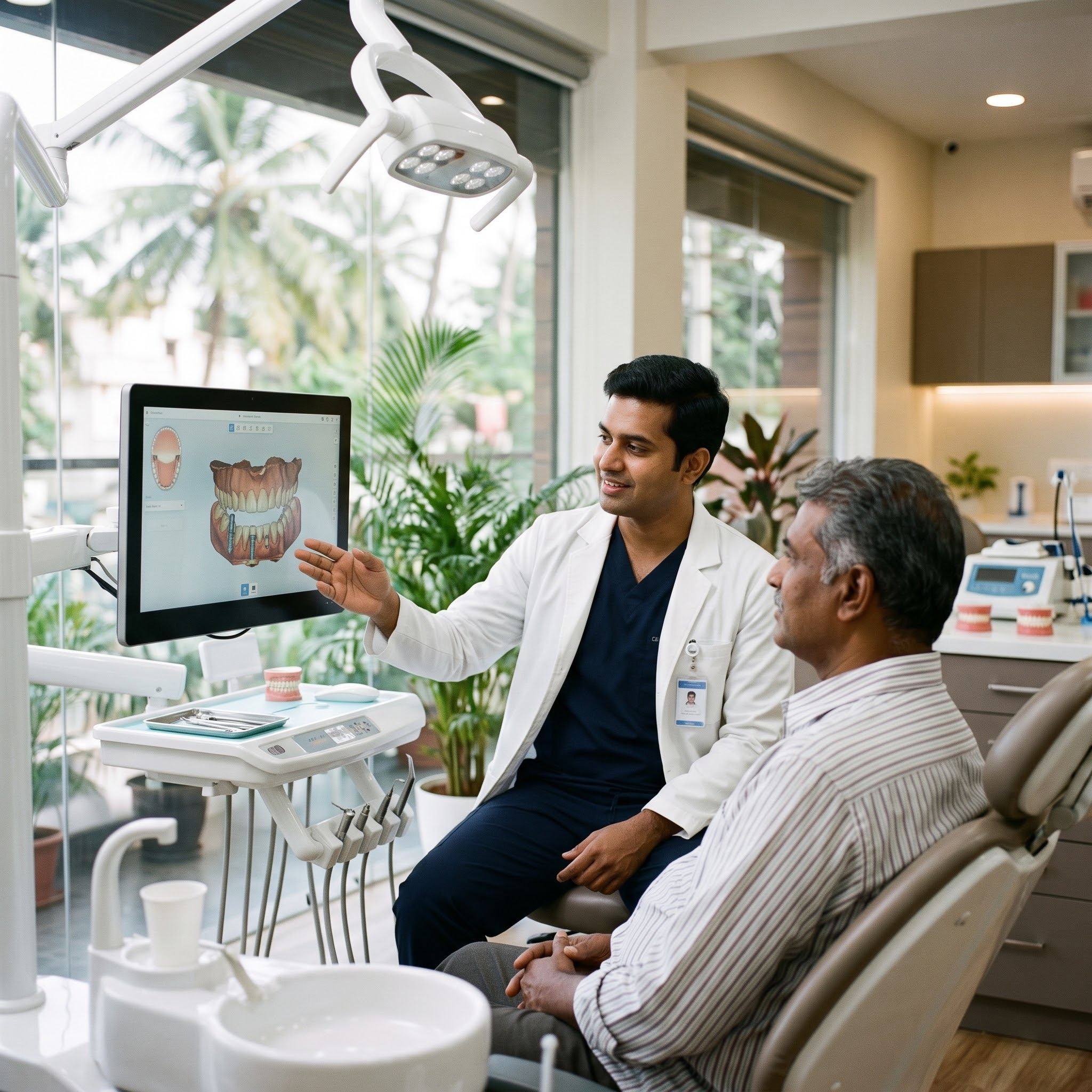
Digital technology has become an important part of modern restorative and implant dentistry.
Depending on the clinic and treatment, digital tools may assist with:
- Dental imaging
- Treatment planning
- Digital impressions
- Restoration design
- Implant planning
- Communication between dental professionals and laboratories
For patients searching for Best digital dental care in Nagercoil, it is useful to understand that technology should support accurate diagnosis and treatment planning rather than replace clinical judgment.
How Long Do Dentures and Implants Last?
The lifespan of a dental restoration depends on many factors.
For dentures, longevity can be affected by:
- Daily wear
- Oral hygiene
- Changes in gum and bone shape
- Fit
- Maintenance
- Material quality
Dental implants themselves can provide long-term support when properly planned and maintained, but the crown or other restoration attached to the implant may eventually need repair or replacement.
Regular dental check-ups and good oral hygiene are important for both treatment options.
How Should Dentures Be Maintained?
If you wear removable dentures, your dentist may recommend:
- Cleaning them regularly using appropriate denture-care methods
- Cleaning your gums and remaining natural teeth
- Removing dentures as advised
- Handling them carefully
- Attending regular dental check-ups
- Having the fit evaluated if they become loose or uncomfortable
Do not use harsh household cleaning products on dentures unless specifically recommended by a dental professional.
How Should Dental Implants Be Maintained?
Dental implants require ongoing oral hygiene just like natural teeth.
Your dentist may recommend:
- Brushing twice daily
- Cleaning between teeth
- Using suitable interdental cleaning methods
- Regular professional dental examinations
- Professional cleaning when required
- Avoiding tobacco products
Even though an implant cannot develop tooth decay like a natural tooth, the surrounding gums and tissues still need proper care.
What About the Cost?
The cost of dentures and dental implants varies considerably depending on the treatment plan.
Factors that can affect the cost include:
- Number of teeth being replaced
- Type of denture or implant restoration
- Materials used
- Need for additional procedures
- Bone condition
- Laboratory work
- Complexity of treatment
- Number of appointments required
Instead of choosing a treatment based only on initial price, consider the expected function, maintenance requirements, treatment timeline, and long-term suitability.
A dental consultation is the best way to receive an accurate treatment estimate.
Why Choose Comprehensive Dental Care?
Missing teeth may not be the only oral health issue that needs attention.
Before replacing teeth, your dentist may need to address problems such as tooth decay, gum disease, infections, or damaged neighbouring teeth.
Choosing a provider offering comprehensive dental care services can make it easier to coordinate diagnosis, treatment, restoration, and follow-up care in one overall treatment plan.
When Should You Consider Replacing Missing Teeth?
You may want to discuss tooth replacement with your dentist if:
- You have recently lost a tooth.
- You have several missing teeth.
- Your dentures are loose or uncomfortable.
- You have difficulty chewing.
- You avoid certain foods because of missing teeth.
- Your existing denture no longer fits properly.
- You want to explore implant-supported tooth replacement.
Early consultation can help you understand your available options before further changes occur in your bite or remaining teeth.
Dentures or Dental Implants: Make an Informed Decision
Both dentures and dental implants can play an important role in restoring missing teeth.
Dentures offer a removable and practical solution for many patients, while dental implants can provide a stable foundation for fixed or implant-supported restorations in suitable cases.
The best option depends on your oral health, bone condition, number of missing teeth, treatment goals, budget, and long-term expectations.
If you are considering tooth replacement, consult a qualified dental professional for a detailed examination and personalized treatment plan. A Dental clinic Nagercoil provider with prosthodontic and restorative expertise can help you understand the advantages, limitations, and expected outcomes of each option.
Restoring missing teeth is not only about improving your smile. It is about restoring comfort, function, confidence, and long-term oral health.
Frequently Asked Questions About Dentures and Dental Implants
1. Are dental implants better than dentures?
Dental implants can offer greater stability and a more fixed tooth-replacement solution, but they are not automatically better for every patient. Dentures may be more suitable depending on oral health, bone condition, treatment goals, and budget.
2. Are dentures a good option for missing teeth?
Yes. Dentures can effectively replace multiple or all missing teeth for many patients. Proper fitting, maintenance, and regular dental reviews are important for comfort and function.
3. How long do dental implants last?
Dental implants can provide long-term tooth support when properly planned and maintained. Their longevity depends on factors such as oral hygiene, gum health, bone support, lifestyle, and regular professional care.
4. How long do dentures last?
Dentures do not last forever. Their fit can change as the gums and underlying bone naturally change over time. Regular dental check-ups can help determine when adjustment, relining, or replacement may be required.
5. Are dental implants painful?
Implant placement is performed using appropriate anaesthesia. Some discomfort, swelling, or soreness may occur after treatment, but the amount varies between patients and depends on the complexity of the procedure.
6. Can dentures replace all missing teeth?
Yes. Complete dentures are specifically designed to replace all or most teeth in an upper or lower arch. Other options, including implant-supported dentures, may also be considered depending on the patient’s condition.
7. Can dental implants replace one missing tooth?
Yes. A single dental implant can be used to support an individual crown in suitable patients. Your dentist will evaluate the surrounding teeth, gums, bone, and overall oral health before recommending treatment.
8. Which is more expensive, dentures or dental implants?
Dental implants generally have a higher initial treatment cost than traditional dentures because they involve surgical placement and multiple treatment stages. The actual cost depends on the patient’s individual treatment plan.
9. Can dentures be supported by dental implants?
Yes. In suitable cases, dental implants can be used to improve the stability of a removable denture. This is commonly known as an implant-supported denture.
10. Where can I get Prosthodontics Service in Nagercoil?
A qualified dental clinic in Nagercoil offering prosthodontic and restorative care can evaluate your missing teeth and discuss dentures, dental implants, bridges, and other tooth-replacement options. A personalized examination is recommended before choosing a treatment.