Medical Tourism in India for Modern Dental Care
Medical tourism allows patients to travel beyond their home country to access healthcare while combining treatment with an international visit. India has become an important destination for patients exploring modern dental care, digital treatment planning and a broad range of dental specialities.
What Is Dental Tourism?
Dental tourism is a part of medical tourism in which patients travel to another city or country specifically to receive dental treatment.
International patients may consider travelling for restorative dentistry, dental implants, orthodontic care, cosmetic procedures, endodontic treatment, oral surgery or other dental requirements.
A dental tourism journey should be planned carefully. Treatment suitability, number of appointments, healing periods and follow-up requirements vary depending on the patient's oral health and the type of procedure required.
Why International Patients Consider India
India combines a large healthcare sector with modern dental technology, experienced dental professionals and access to a wide range of dental specialities.
Modern Dental Technology
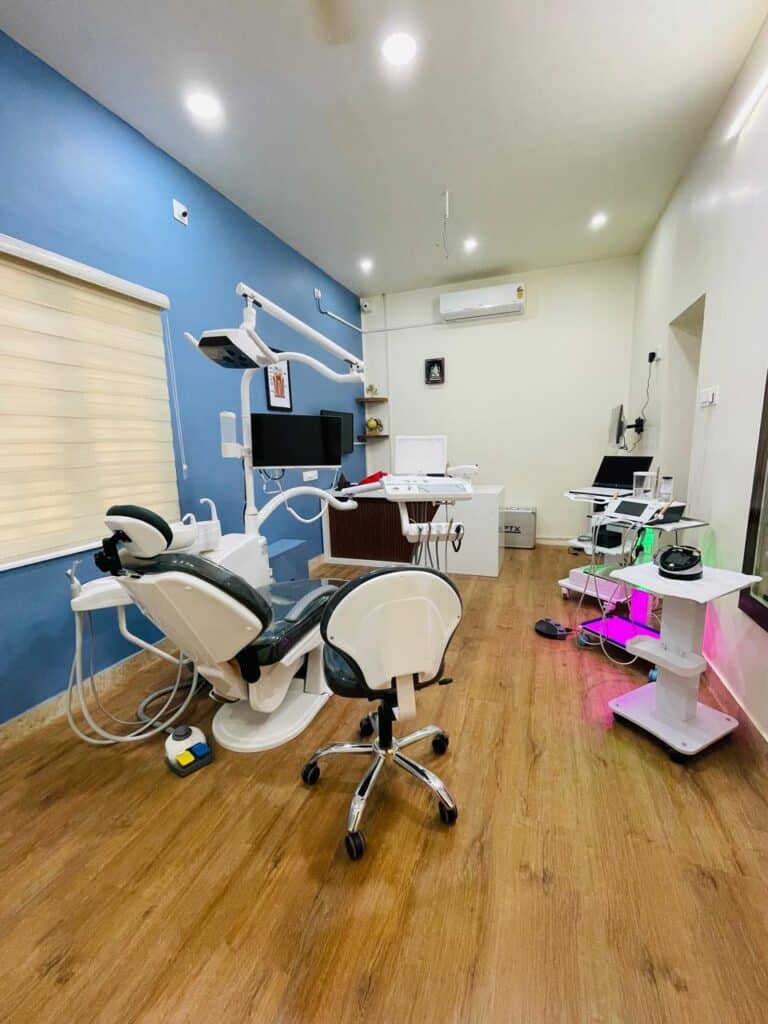
Digital imaging, intraoral scanning and computer-assisted workflows are increasingly used to support diagnosis, treatment planning and restorative dentistry.
Wide Range of Treatments
Patients can access preventive, restorative, orthodontic, implant, endodontic, cosmetic and surgical dental treatments according to their individual requirements.
Treatment Planning
Digital records and diagnostic information can help dental professionals communicate treatment requirements and plan procedures in a structured manner.
Communication
English is widely used within India's private healthcare sector, which can help communication with many international patients.
Travel Experience
Depending on treatment and recovery requirements, patients may also combine their dental visit with time spent exploring destinations in South India.
Individual Care Planning
Dental tourism treatment should be organised around the patient's clinical condition rather than simply around travel dates.
How Digital Dentistry Supports International Patients
Digital dentistry allows dental professionals to collect, review and communicate clinical information using modern digital tools.
Treatments International Patients May Consider
Treatment selection depends on examination, diagnosis, oral health, available treatment time and individual clinical requirements.
Dental Implants
Implant dentistry may be considered for replacing one or more missing teeth. Treatment planning may involve dental imaging, assessment of bone support and staged treatment.
Crowns & Bridges
Dental crowns and bridges can be used to restore damaged teeth or replace missing teeth depending on the patient's oral condition.
Root Canal Treatment
Root canal treatment may be recommended when the dental pulp is affected by infection or inflammation and the tooth can appropriately be preserved.
Braces & Clear Aligners
Orthodontic treatment focuses on tooth alignment and bite correction using options such as braces or clear aligners where clinically suitable.
Cosmetic Dentistry
Cosmetic dental planning may involve procedures intended to improve tooth colour, shape, proportion or overall smile appearance.
Oral Surgery
Certain conditions may require surgical dental procedures. Appropriate examination, imaging and recovery planning are particularly important for travelling patients.
Planning Dental Treatment From Abroad
Initial Information
The patient explains the dental problem and provides available dental records or previous treatment information.
Preliminary Review
Existing photographs or diagnostic records may help the dental team understand the case before travel.
Visit Planning
Travel dates should allow sufficient time for examination, treatment appointments and any necessary recovery.
Clinical Assessment
An in-person dental examination and relevant diagnostic investigations help determine the final treatment plan.
Treatment & Review
Treatment is completed according to the agreed clinical plan, followed by appropriate instructions and follow-up.
Planning a Dental Trip
Medical travel requires more planning than a normal dental appointment. Travel duration should allow time for examination, treatment, laboratory work where required, healing and clinical review.
Avoid arranging a return flight immediately after a procedure without understanding the expected treatment and recovery schedule.
Some dental treatments require several appointments, laboratory stages or healing periods between procedures.
Surgical or complex procedures may require a period of recovery before normal travel activities are comfortable.
Understand whether follow-up can be managed remotely or whether further in-person dental review will be required.
Information Worth Preparing Before Your Visit
Dental History
Prepare information about previous dental treatments, existing restorations, implants, orthodontic work or previous dental surgery.
Dental Records
If available, carry recent dental X-rays, scans, photographs or previous treatment documentation.
Medical Information
Inform your dentist about relevant medical conditions, allergies and medicines that may affect dental treatment.
Travel Schedule
Share your planned arrival and departure dates so the proposed treatment schedule can be considered in relation to your stay.
Understanding Treatment Time
The time required in India varies considerably between procedures and patients. The examples below explain the general nature of treatment scheduling rather than fixed treatment durations.
| Treatment Type | Planning Consideration | Possible Follow-Up Requirement |
|---|---|---|
| Dental Consultation | Examination and diagnostic assessment may be completed during the initial visit. | Depends on findings and whether further treatment is recommended. |
| Root Canal Treatment | May require one or more appointments depending on tooth condition and treatment complexity. | Final restoration or crown may require an additional stage. |
| Crowns / Bridges | Preparation, digital impression or scanning and restoration fabrication must be considered. | Review may be recommended after placement. |
| Dental Implants | Implant dentistry can involve surgical and restorative stages separated by healing time. | Multiple visits may be required depending on the treatment plan. |
| Orthodontics | Orthodontic treatment generally continues over a longer period and requires periodic monitoring. | Ongoing clinical review is normally necessary. |
Dental Treatment in Nagercoil, South India
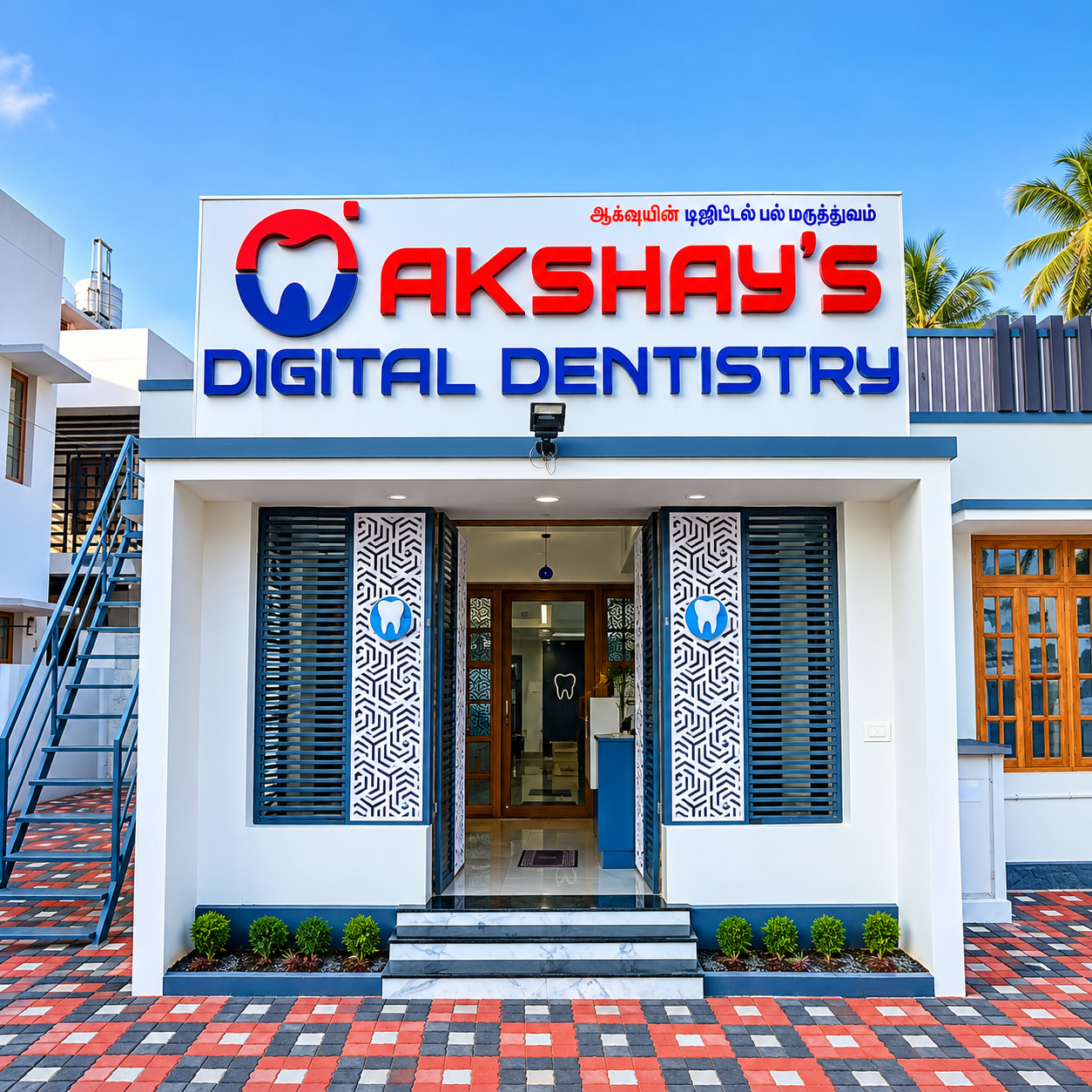
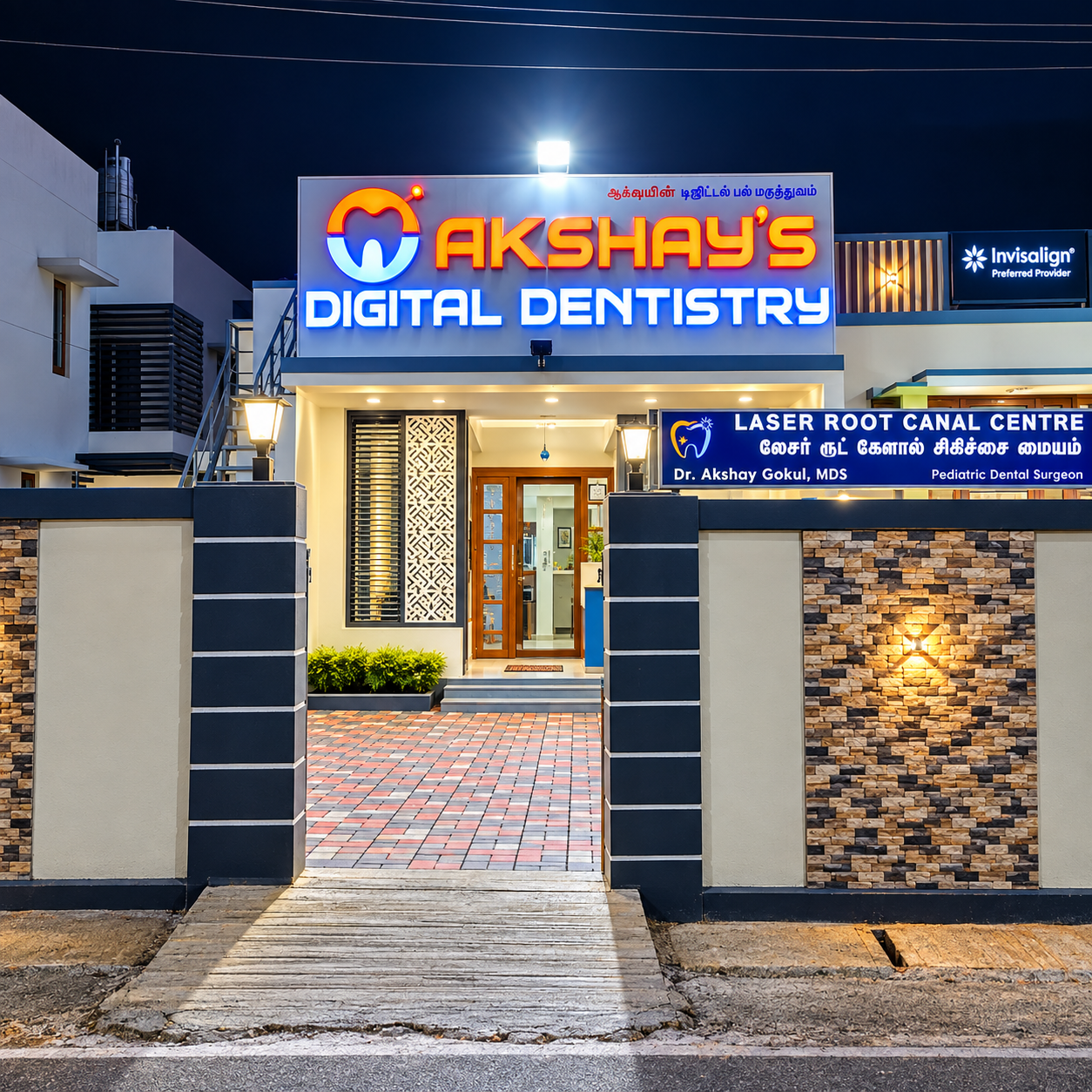
Akshay Digital Dentistry is located in Nagercoil, Tamil Nadu, close to the southern end of India. Patients visiting the region can experience the distinctive culture and landscapes of Tamil Nadu and neighbouring Kerala while planning their stay around their dental treatment requirements.
Questions About Dental Tourism?
Travelling to another country for dental care requires careful planning. These answers explain some of the most common considerations for international dental patients.
Every Dental Journey Is Different
Treatment duration, recovery requirements and the number of appointments depend on your oral condition and the procedure recommended after clinical examination.
Patients may consider India because of the availability of modern dental technology, multiple dental specialities and established private dental care services. The suitability of travelling for treatment still depends on the type of procedure, the patient's oral health and the follow-up care required.
Previous X-rays, dental scans, photographs and treatment records may help the dental team gain an initial understanding of your condition. However, a final diagnosis and definitive treatment plan may require an in-person examination and additional diagnostic investigations.
There is no single stay duration that applies to every patient. Treatment time depends on the procedure, number of appointments, laboratory requirements, healing period and whether a clinical review is needed before travelling home.
Implant treatment can involve several stages. Depending on bone condition, healing, restorative requirements and the treatment plan, some patients may require more than one visit. The appropriate schedule can only be determined after clinical evaluation.
If available, bring recent dental X-rays, scans, photographs, implant records, orthodontic records and details of previous dental treatment. Relevant medical information, allergies and current medications should also be shared with the treating dentist.
This may be possible depending on the procedure and your recovery requirements. Patients having minor treatment may have greater flexibility, while surgical or complex procedures may require rest and follow-up. Dental treatment and recovery should remain the priority when planning travel activities.
The appropriate time to travel depends on the procedure performed and your recovery. Certain surgical or complex dental procedures may require observation or a review period. Patients should follow the specific advice provided by their treating dentist before arranging return travel.
Follow-up requirements vary by treatment. Patients should understand their maintenance needs, review schedule and any symptoms that require attention before leaving India. Depending on the procedure, future care may involve communication with the treating clinic and/or examination by a dentist in the patient's home country.
Dental treatment recommendations, treatment duration, suitability, number of appointments and expected results vary from patient to patient. Information provided on this page is intended to explain dental tourism and treatment planning in general and should not replace an individual clinical examination, diagnosis or professional dental advice.